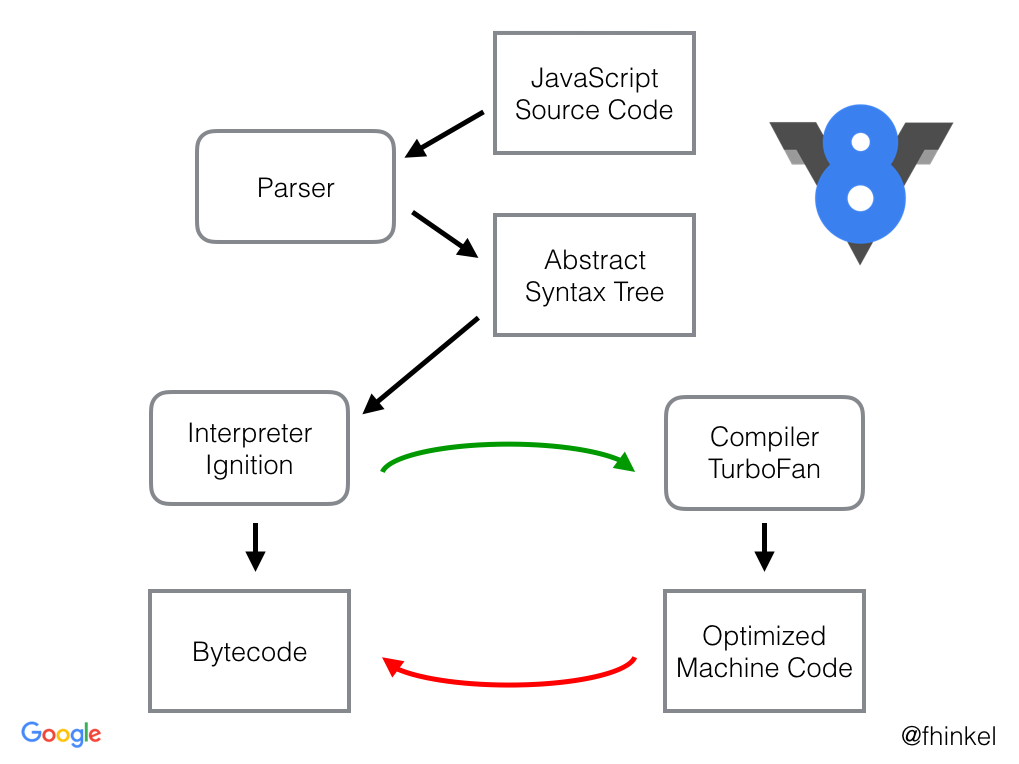
V8 JavaScript Engine: Code Execution Phases
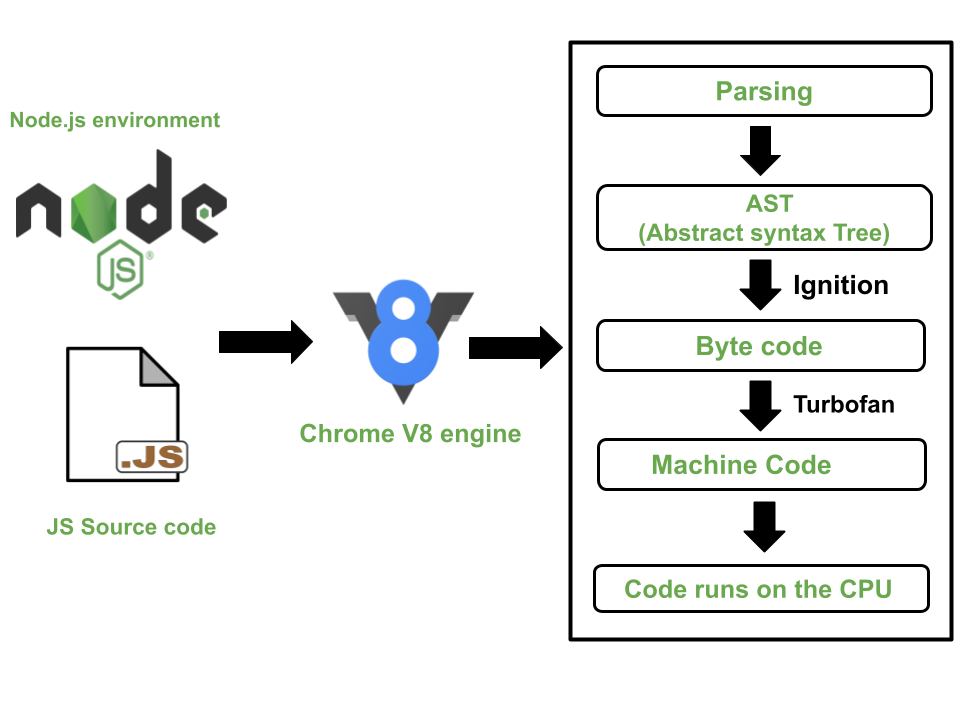
1. Parsing Stage
- Lexical Analysis: V8 reads the JavaScript code and breaks it down into tokens, which are small chunks like keywords, operators, and identifiers.
- Syntax Analysis: The tokens are then arranged into a structure called an Abstract Syntax Tree (AST), which represents the code's structure and logic.
2. Ignition (Interpreter)
- Bytecode Generation: V8 converts the AST into bytecode, a simpler, intermediate form of the code that’s easier to run.
- Execution: The Ignition interpreter runs this bytecode directly, allowing the code to start executing quickly, but not yet fully optimized.
3. Profiling
- Hotspot Detection: As the code runs, V8 watches for parts of the code that are used a lot, called "hot" functions. It gathers data on these parts to decide if they should be optimized.
4. TurboFan (Optimizing Compiler)
- Optimization: For the frequently used "hot" code, V8 uses the TurboFan compiler to turn the bytecode into highly optimized machine code, making it run much faster.
- Deoptimization: If the assumptions used to optimize the code turn out to be wrong (like a variable type changing), V8 can revert the code back to a slower, but safer, execution mode.
5. Garbage Collection
- Memory Management: V8 regularly cleans up memory by removing data that the program no longer needs, making sure that memory usage stays efficient.
6. Final Execution
- Execution: The optimized code continues to run efficiently until the program finishes or until changes in the code require adjustments.
This step-by-step process ensures that JavaScript code is executed as quickly and efficiently as possible.
"""